

“We have a well and plenty of sun. How much for a solar pump inverter?” If you sell pumping equipment in Oman, that sounds like a straightforward question. You could ask for the motor power and send a number. But the person buying the system is probably asking a bigger question: will the farm get enough water when it needs it?
To answer that honestly, Oman solar well pump quote data has to start below ground. The well may deliver water steadily, or its level may fall after the pump runs for a while. The farm may use water at sunset, hours after the strongest sunlight. An inverter can manage an appropriate motor and power source; it cannot create groundwater or decide the farm’s irrigation schedule.
Make sure everyone is talking about the same well
Ask the owner to identify the well and share the records they have for it. Oman’s Modify Well Data service refers to a well inventory and registration certificate when the well type or use changes. That does not mean every solar equipment purchase requires this particular service. It does show why “the well on our farm” is a poor substitute for the correct well identity and operating records.
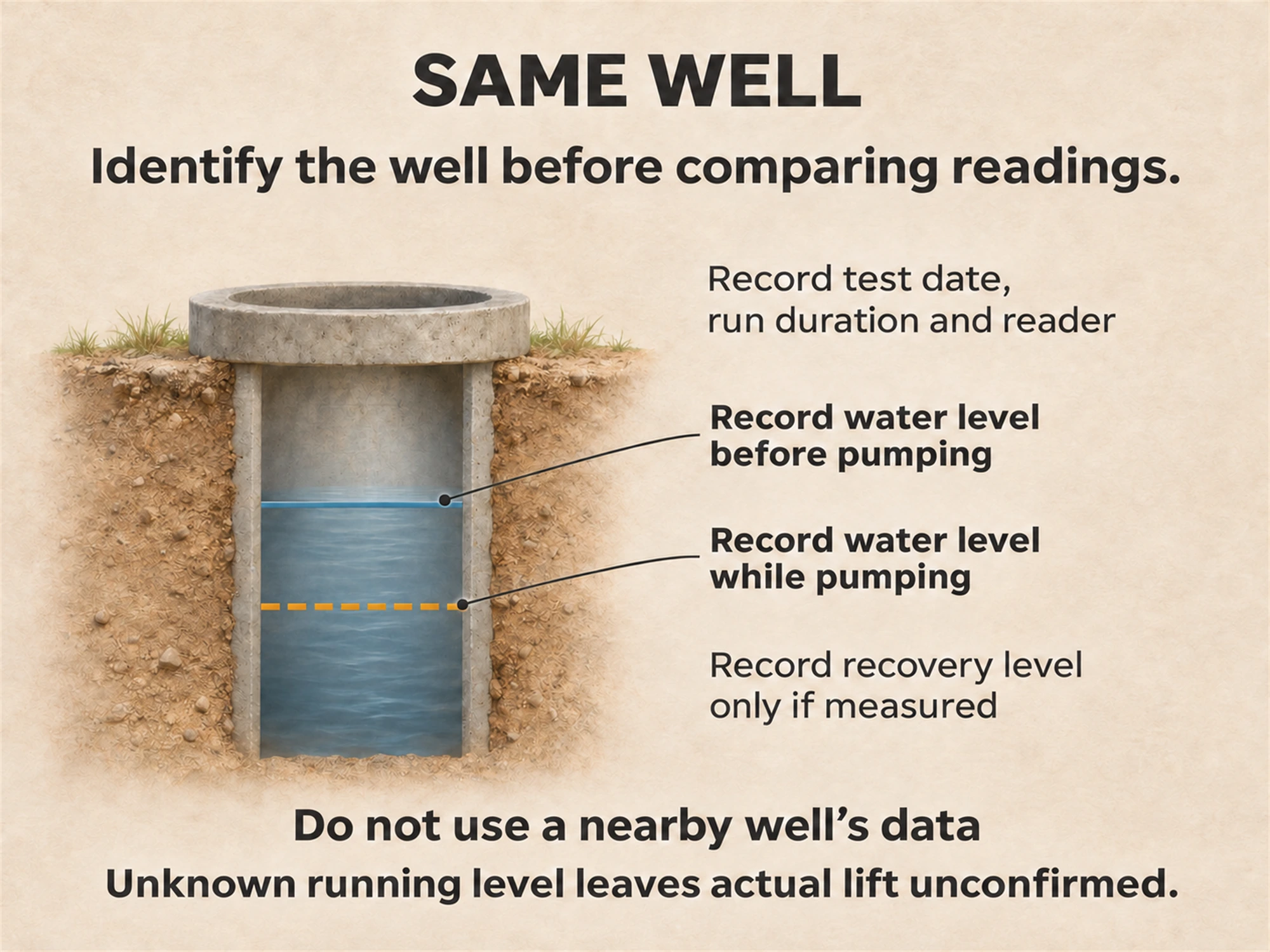
Next, ask what has actually been measured. How far below ground is the water before pumping starts? What level does it reach after the pump has run for a meaningful period? How long did that test last, and when was it done? A drilling contractor, well operator, or water specialist may hold these answers. A years-old depth estimate, on its own, is not a reliable description of today’s operating well.
Put the answers side by side on one sheet: well identification; date of the test; water level before pumping; water level while the pump was running; duration of the run; and who took the readings. Leave a space for the recovery level after the pump stops if it was measured. Do not fill missing boxes with values from a nearby well. If the running level is unknown, the quotation should say that the actual lift still needs checking.
You do not have to teach the customer groundwater science on the phone. A simple explanation is enough: “Before we decide how hard the pump should work, we need to know how much water the well can keep supplying.” If the well cannot recover as quickly as the proposed system removes water, more solar panels and a larger controller will not solve the shortage. The farm needs a source and operating plan that the responsible local professionals can support.
Ask when the farm needs water, not just when the sun shines
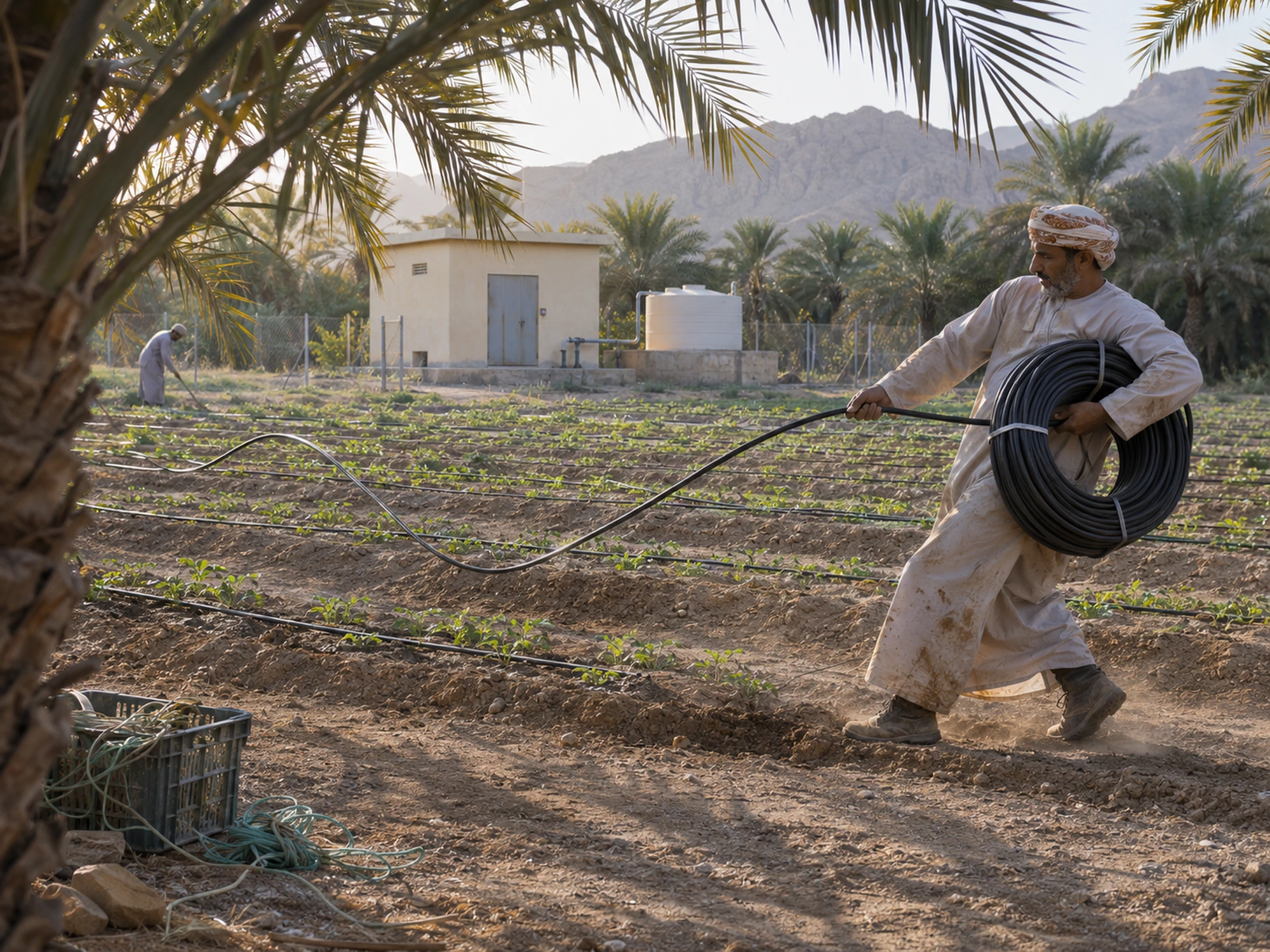
Draw a line from the wellhead to the point where water is used. Does the pump fill a tank first? Does it feed an irrigation header directly? Are different fields watered in rotation? Ask the farm manager how much water is needed during a typical day and when that need occurs. Then ask the irrigation designer to check the flow, lift, pipe route, and storage arrangement.
Imagine the farm wants water for an evening irrigation round. Solar generation may be strongest earlier in the day. Storage might bridge that gap: pump into a tank while power is available, then use the stored water later. But the tank must be planned around the well’s actual supply and the farm’s demand. It is not sensible to copy a tank size from another farm or promise a certain number of pumping hours without site information.
Ask a practical follow-up: does the farm need water to arrive at the field immediately, or can it arrive at the tank earlier? That answer changes what the pump, storage, and controls must do. If the owner cannot yet say how the irrigation rounds are scheduled, keep the storage decision open instead of describing a solar-only system as guaranteed evening supply.
Oman’s service for modern irrigation in well-irrigated farms offers a route to request technical studies and engineering designs. It supports involving the right agricultural and engineering people. It does not declare that all farms have the same water need or the same approved layout.
Get the solar and pump details on the same page
Once the water job is clearer, the electrical and pump questions make sense. Ask for the pump model and curve, a photograph of the full motor nameplate, and the cable route to the motor. The pump curve is the maker’s chart showing how flow changes as the pump has to lift water farther or push against more pressure. The motor plate tells the supplier about voltage and current. A motor’s kilowatt figure by itself cannot describe the well or the delivery pipe.
On the solar side, ask the installer for the actual module data sheet and a drawing of how the panels will be wired together. Two arrays with the same total wattage can have different voltages and currents. Temperature changes what a string can deliver, too. The qualified electrical designer must check those values, protection, wiring, and grounding against the exact equipment chosen for the site.
Do not rely on a photograph of a row of panels or the sentence “there are enough panels.” An honest quote can say that array design is pending if the electrical details have not arrived. BEDFORD’s solar pump array sizing guide shows why water demand and panel-string checks belong in the same conversation, but its illustrative figures are not the design for an Oman farm.
Check whether the planned work changes the permit question
The exact work matters. Adding a controller to an existing pumping arrangement is not automatically the same thing as replacing an operating well’s pump with a larger one. Oman’s larger-capacity pump replacement service describes a specific application and its conditions, including a registered operating well and approval of well partners. The owner and local advisers should confirm whether that route or another approval applies to the proposed change. A drive supplier should not give legal clearance based on a product enquiry.
This is also a good time to ask who will approve the water source, irrigation plan, electrical installation, and commissioning. If those responsibilities are unclear, put them in the quote as open items. You can give a budget range while explaining that final pump, array, and controller selection depends on the missing records.
What should the first useful quote contain?
It need not be a giant form. Give the customer a short list with an owner beside each item: well identity and recent pumping observations from the owner or well specialist; daily water need and storage plan from the farm and irrigation designer; pump curve and motor plate from the pump supplier; panel layout and protection plan from the solar installer; and approval status from the responsible project team. A useful first email might say, “We can price the controller provisionally against the motor details supplied; please send the recent running water level and panel string plan before we confirm the complete system.” That is a hypothetical wording example, not a BEDFORD project quotation.
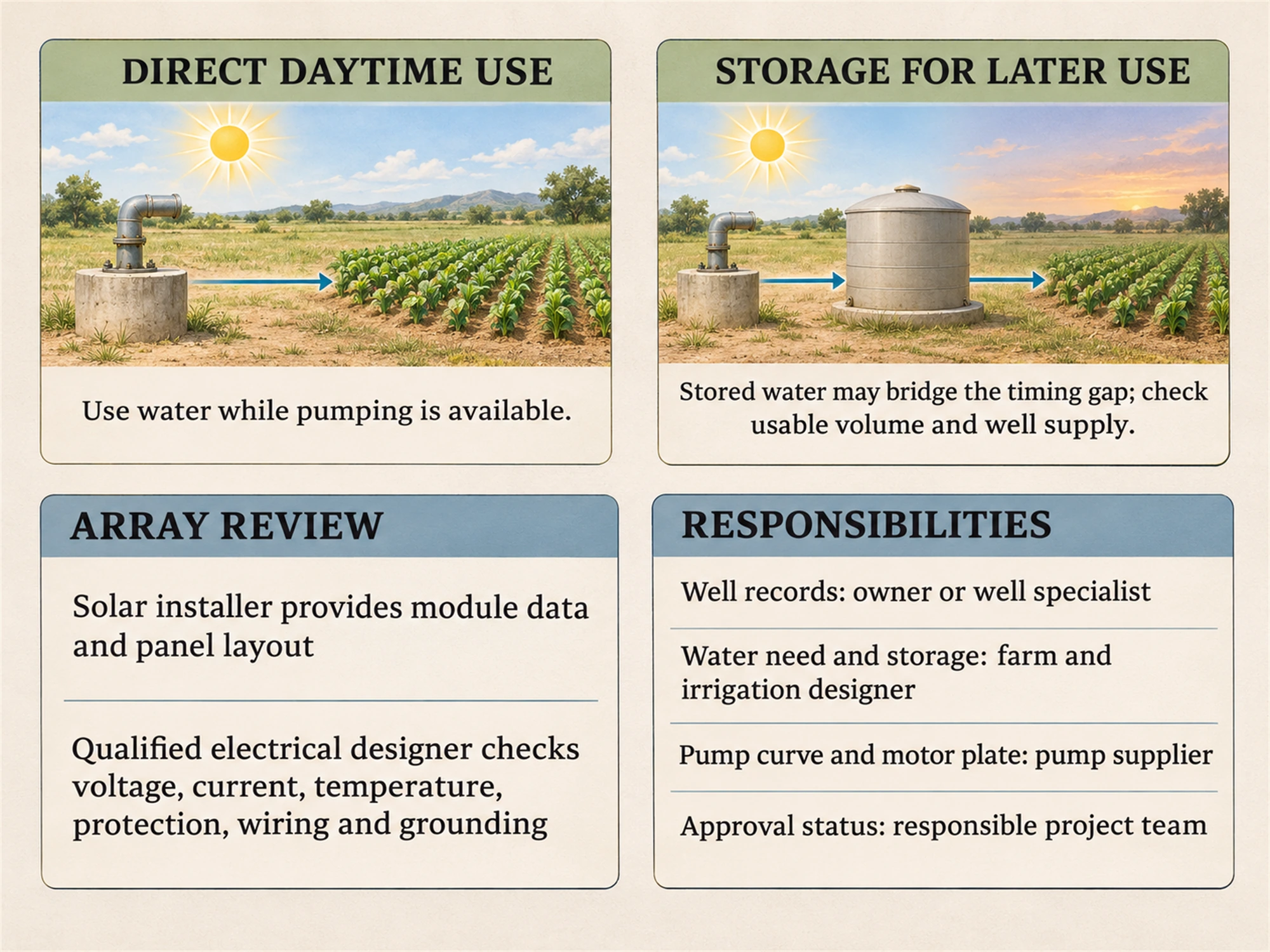
Then be specific about the unknowns. If the well’s running water level is missing, the pump’s real lift is not confirmed. If the storage plan is missing, daylight pumping may not match the farm’s watering times. If the panel strings are undefined, the electrical match is still open. These are not excuses to delay a sale. They are the questions that make the eventual system useful.
For a verified solar well-pumping duty, BEDFORD’s solar pump inverter range is a product category to consider. No particular model is selected here, and nothing in a government service page proves a product’s suitability for this farm. Start with the well and the water schedule; the equipment quote will be much easier to trust once those are clear.